Digital ideas & creativity
Keep an idea notebook that is allowed to be unfinished
An idea does not need a business plan on the day it arrives. Give it a place to wait and a way to be tried.
Blogs
Browse the whole collection, or narrow it to what you feel like exploring.
No matches. Try a different search or clear the filters.
An idea does not need a business plan on the day it arrives. Give it a place to wait and a way to be tried.
A quiet folk-inspired sketch about leaving room for someone to return.
A woman gathers ordinary sounds, then finds a place for the one she cannot keep.
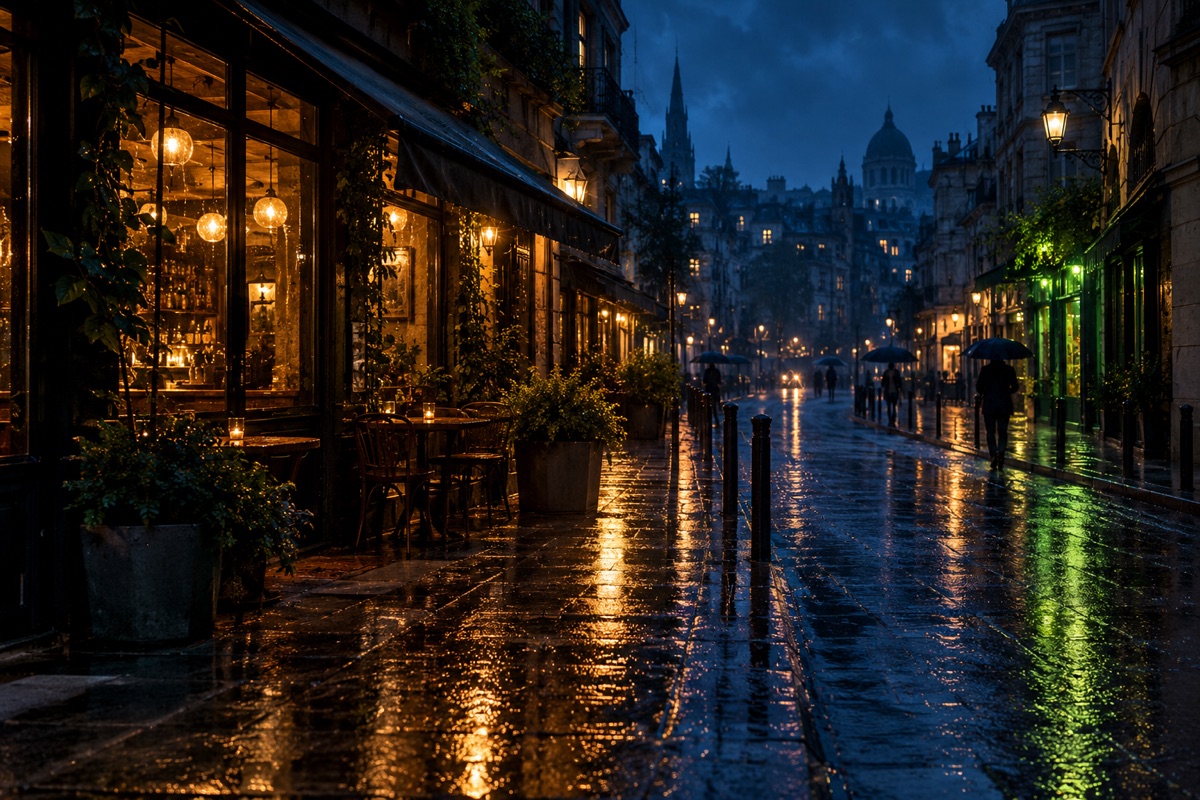
Amber windows, blue evening, and the street reflected beneath your feet.
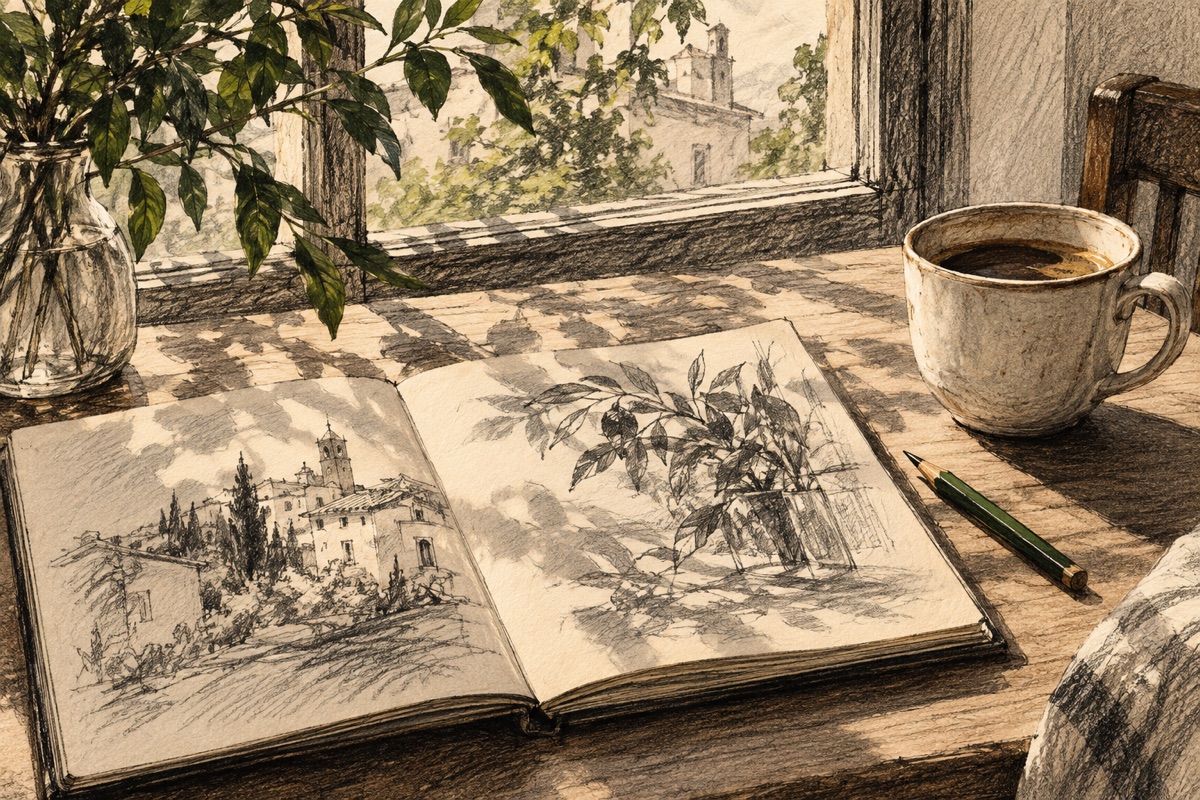
A sketchbook, a cup, and a window that makes ordinary objects worth a second look.
What small idea keeps returning without becoming a project?
A short story with somewhere to go.
You do not always need a new destination to find a new detail. Change the question you take with you.
A bright, easygoing melody for an imaginary walk with nowhere urgent to be.
A secondhand cookbook offers a recipe and a question its new reader cannot answer.
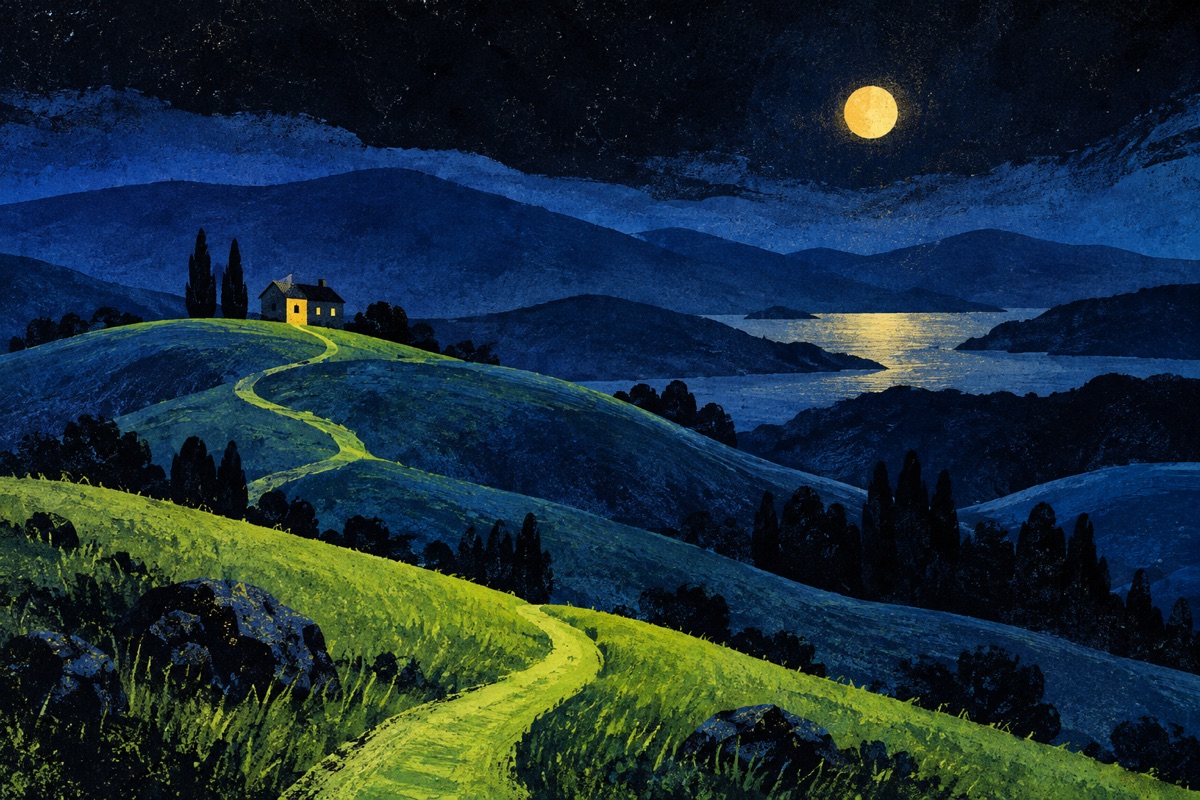
A narrow green path crosses blue hills toward one small light.
What would your idea look like if it were ten times smaller?
An ordinary object, a small limit, a different way to look.
A light in a window, an empty platform, a cup left on the table: a small scene can give a lyric somewhere to begin.
A gentle minor-key piece about letting a beginning remain a beginning.
A bench with an unexpected view changes a familiar walk.
Can you describe a room without using beautiful, ugly, or boring?
Give an assumption a little room to move.
Before adding another ingredient to the basket, make a plan for the ingredients already waiting at home.
A cartographer leaves one place unnamed, and a visitor asks why.
What context would someone need to understand this page a year from now?
Words before rhyme. A rhythm before a finished song.
A picture gives us details. The story we attach to those details deserves a second look.
An empty chair in a café gives two strangers a small reason to pause.
Whose perspective is absent from the story you are telling?
A nearby place told through three observations.
A page can be useful before it looks impressive. Let drawing become a way to notice, rather than another thing to perform.
Could a character leave with a smaller change than a grand revelation?
The feeling of a table, written in your own words.
Digital housekeeping is easy to postpone because nothing appears wrong. The inbox opens. The photos are still there. The familiar password still works. But access is exactly what makes those accounts worth protecting.
Which idea gets more interesting when you allow a tension to remain?
One useful step before a whole product.
Travel begins with our own hopes: somewhere to rest, something to see, a different taste, a change of routine. But the destination also belongs to people whose lives continue when the visitor leaves.
What could you create from the title “A door left open”?
One scene, two directions.
A quiet moment does not always stay quiet for long. A message arrives. A screen lights up. A quick check becomes three unrelated checks, and the thing you were doing slips into the background.
What did the first draft notice that the polished version removed?
There is a certain relief in a meal that asks very little of you: familiar ingredients, a preparation you understand, and enough flexibility to use what is available.
Where might less content make a page easier to understand?
A story can be grammatically smooth and still feel strangely empty. All the expected words are there, but nothing seems observed. The missing part may be small: a gesture, an awkward pause, a particular sound, or a detail that refused to leave your mind.
What question could you explore without buying anything?
An itinerary is helpful until it becomes a list you are anxious to complete. A place can start to feel like a sequence of photographs rather than somewhere people live.
What else could explain what you observed?
An ingredient list can tell you what goes into a dish. It cannot always tell you why that dish matters, who taught someone to make it, or when it appears on the table.
What would change if you asked “What am I missing?” before asking for an answer?
An idea can feel complete while it lives in your head. Every button works. Every visitor understands the label. The problem disappears exactly as imagined. The first person who tries it often reveals a different story.
Which part of your creative work would you rather do yourself, even if a tool could do it faster?
There is something appealing about getting an answer before the question has properly settled in your mind. Type a few words, wait a moment, and an empty screen becomes a confident explanation. The harder part is deciding what deserves your confidence.
Does your phone make the things you care about easier to reach?
Sometimes a familiar song seems to carry more than music. A room, a season, or a stretch of life comes into focus. The details may be incomplete, but the feeling arrives quickly.
What is one boring inconvenience a tiny digital tool could solve?
What would you want to verify before passing an AI answer to someone else?
What have you walked past all week without really noticing?
What could an unplanned half hour make room for?
What would make today feel complete without making it perfect?
Which neglected interest could you return to for just ten minutes?
What do you keep doing simply because it is the easiest option?
What can you learn about a place without buying anything?
How would you describe a place while leaving room for what you do not know?
What might you notice if your itinerary had one fewer destination?
When does a picture turn someone else into part of your content?
What would you show a curious visitor within walking distance?
Which dish makes you think of an occasion rather than just a flavor?
Could you describe a meal without saying delicious?
What meal could begin with an ingredient you already have?
How does a familiar dish change from one table to another?
What happens when eating is the only thing you are doing?
Which sound in a familiar track have you never paid attention to?
What connects five songs beyond their genre?
Which everyday sound could become the beginning of a story?
Could a simple beat give a new idea somewhere to begin?
What does a song bring back, and what are you less sure about?
What is the detail you would cut for being ordinary, but still remember?
What changes when you reverse a familiar assumption?
What are you curious about that does not need an answer tonight?
How could someone try your idea before you spend a week building it?
What would happen if your story ended with a question instead of a lesson?
What did the picture leave outside its edges?
What changes when you sketch the dark shapes before the object?
What would your chorus say if rhyme did not matter?
What might another character notice in the same scene?
Can a small beginning be enough for today?
Does a number measure the thing you actually value?
What can texture tell you that a rating cannot?
What is a place telling visitors about how to behave?
What small detail competes with the obvious subject?
How much can you say with ten marks?
Which part of a lyric might be stronger with silence after it?
Could an interesting format help you express an original idea?
Saved finds stay on this browser.